

Identification is an important part of raising animals. While not as advanced as social security numbers, IDs, and licenses, tags and markings let people know a bit more about where a specific animal comes from.
When it comes to pigs, permanent identification is mandatory for exhibition. For general farming and breeding, it’s also beneficial for keeping track of your swine.
You have a few options available to you for marking a pig. Here are the most common methods.
Traditional Ear Notching
Ear notching is a universal system of identification that has been around for a long time. It’s permeant, affordable, and well recognized. For ear notching, piglets have their ears clipped shortly after birth to keep discomfort at a minimum.
While ear notching might seem mysterious to the untrained eye, it’s actually quite simple when you understand the system.
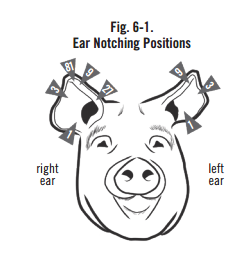 Each ear represents a different piece of information which is determined by notches made in different zones of the ear.
The right ear has five notching areas, each area representing a different number. The numbers are added together to determine the pig’s litter number, which ultimately shows which sow the pig came from. If two pigs came from the same sow, they’d have the same notching marks in their right ear.
The left ear represents the pig’s number within their litter. So if the pig was the third to come out, it would have a number 3 notch. Because the left ear deals with smaller numbers, there are only 3 notching areas.
Plastic Ear Tags
For this method, a plastic, colored tag is placed on the ear of the pig. This method has grown to be very popular as it’s straightforward and displays the necessary information in a clear, easy to read method.
Some see this method as more humane as well. A plastic tag can be applied at any stage of life and is really no different than a person having their ear pierced.
Electronic Identification
Electronic identification is, of course, the most advanced form of identification. An electric button is placed in the ear. This button can be scanned by a device to display the necessary information. The biggest advantage here is that the electronic button can hold far more information than a tag or notch can display.
This includes origin, birthdate, health history, and more! While not as common as the previous methods, this is likely where the industry is heading.
To learn more about how to raise a pig for show or for breeding, make sure to pick up a copy of Doc Sander’s Goes Whole Hog, available now!
 vacaresources.com
